

What we cover / TL;DR
The biggest challenges facing campus conference teams
Six things your conference management software should handle
What to look for when choosing a better system
Fall events, winter retreats, spring commencement guests, summer camps. For a conference and events office, there is no off switch. So the question is not whether you have conference management software. It is whether that software is creating revenue or just recording it.
The stakes are real. A 2025 survey of 418 institutions found that nearly two-thirds generate less than 10% of their residence hall revenue from camps, conferences and other summer stays. That’s a lot of untapped potential, especially when beds sit empty between bookings. Retreat centers and other venues face the same gap, with rooms that sit idle between bookings. Most offices are asked to close it with the same team, and sometimes a smaller one.
You might be happy with your system. You might be counting the days until your contract ends. Either way, here are six things worth holding it up against.
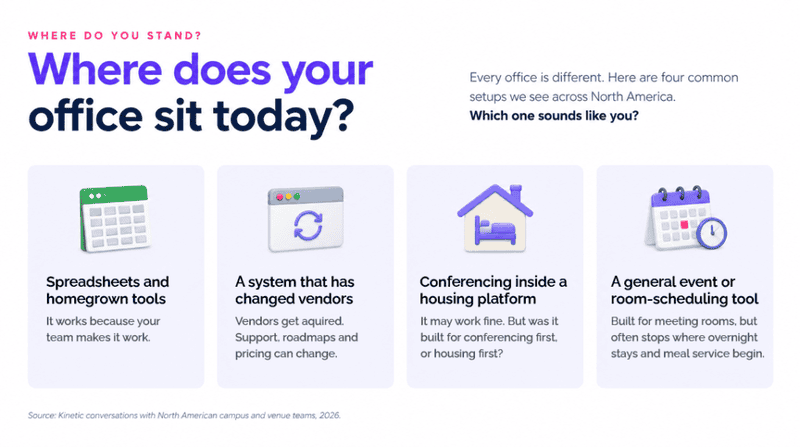
1. Keep every event in one record, from inquiry to invoice
A conference director told us they “go to 12 different places” to find everything about a single event. Another described the stack as “Google, spreadsheets, email, the system and the database.”
That is not a people problem. It is a record problem. When the inquiry, rooms, catering, housing, contract, deposit and invoice live in separate places, every handoff is a chance for an error, and every new hire needs months to learn where things hide.
Your system should:
Keep every event in one place, accessible to every team involved.
Build a quote once, without retyping the same information.
Turn approved quotes into invoices without re-keying details.
2. Answer inquiries fast, and let repeat clients help themselves
When we analyzed pain points across North American accounts, quote and RFP turnaround was the most common frustration. That makes sense. A group planner who emails three campuses often books with the one that answers first.
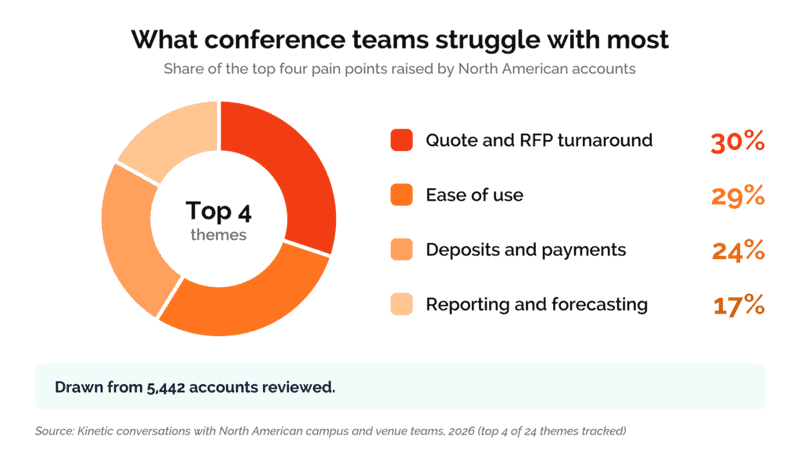
Speed isn’t about typing faster. It’s about getting a quote out while the planner is still comparing options. Repeat clients shouldn’t need an email chain to rebook, and your team shouldn’t have to rebuild last year’s event from scratch. Less time on routine requests means more time winning new business.
The test: how many minutes pass between an inquiry arriving and a quote you are proud to send?
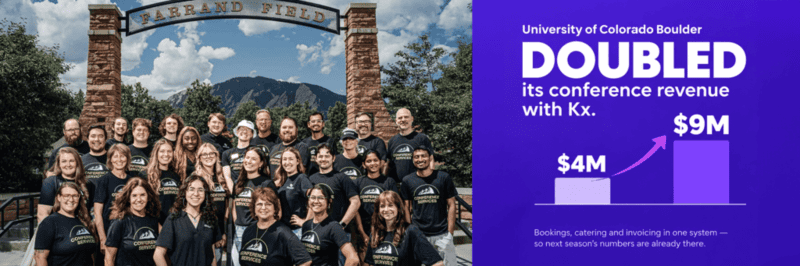
CU Boulder doubled its conference revenue while managing hundreds of events each semester. See how they used Kinetic to support its growth: Read their story
3. Fill beds and rooms in the slow weeks, not only the busy ones
Saturdays in June fill themselves. The money is in the gaps: a Tuesday in July, a break week, a block of beds that sat empty over winter.
Worth asking:
Can you identify which weeks and bed blocks sat empty, and what that cost you?
Can you price peak weekends differently from slower midweek periods?
Can you track lost or declined business and understand why?
Can you manage short-stay bookings outside the peak season?
If you cannot see where inventory sat unused, you cannot price it better next time.
4. Keep catering inside the booking, not beside it
One office described catering requests as a “manual notification outside the booking system.” Another said they had no banquet event order, just “a Word document.”
When catering sits outside the event, orders get missed, dietary details get lost and guests end up juggling separate paperwork. The answer isn’t another spreadsheet. It’s keeping catering, bookings and finances connected so changes reach the right people.
5. Manage camps and complex groups without spreadsheet chaos
Camps, summer programs and large group bookings can bring significant revenue to campus, but managing them comes with added complexity. Youth programs may also require additional registration, approvals and safety procedures.
When rosters, room assignments and guest details live across multiple spreadsheets, even a simple question like ‘Where is this guest staying?’ can become a search through outdated files. Last-minute changes only make things harder.
The right system lets you import guest lists, assign rooms and manage group details in one place, giving your team more time to look after guests.
The test: If a group sends a revised rooming list the night before arrival, how quickly can your team work from the updated information?
6. Report without rebuilding it by hand
“What gets exported still has to be manipulated to be useful,” one director told us. Another could not produce three years of event history for an internal audit without a long search.
Good reporting should be a by-product of good records, not a weekly project.
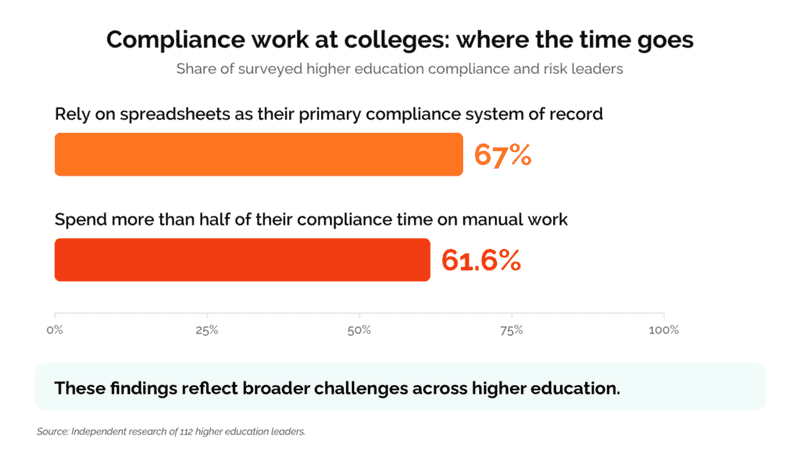
Manual rebuilding is a wider campus pattern, not only a conference one. In a 2026 survey of higher education leaders in security, compliance, IT, audit and risk, most said spreadsheets are their main system of record, and most said their teams spend more than half their compliance time on manual work.
Your system should:
See revenue, room usage and waived revenue without rebuilding reports.
Find years of event history in minutes, not hours.
Give leadership the numbers behind your growth story.
Thinking about switching? What to look for

Maybe nothing is badly broken. Maybe your team simply works 50 to 60 hours a week to compensate for the system, and you have stopped noticing. If a change is on the table, ask every vendor:
Built for campuses? Was it designed for collegiate conference operations, or adapted from a housing, corporate event or ticketing tool?
Go-live timeline? Ask for a realistic plan and what you will need to provide. Months, not a year.
Integrations? Housing, finance, payments, timetabling and your single sign-on.
Pricing clarity? What is included, what is a paid module, and what happens at renewal?
Real support? Will you speak to people who understand conference work?
Ownership? Who owns the vendor, and what happens to your system if they are sold?
That last question matters more than it sounds. Software that gets acquired can be sunset, merged or re-priced, and a forced migration lands on your team in the middle of a busy season.
So does a platform like that exist?
Yes It does!
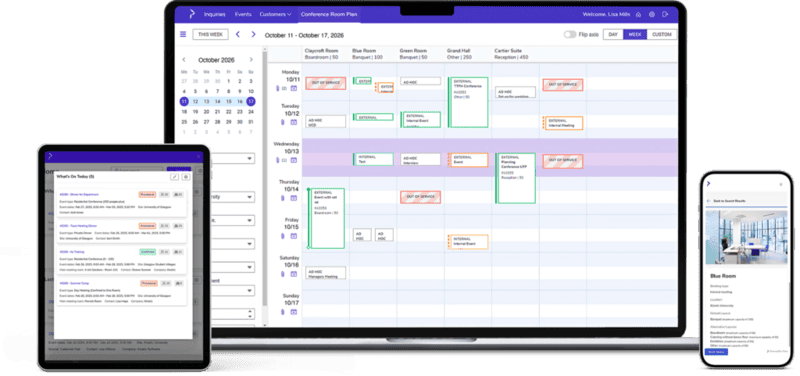
It is the thinking behind how Kinetic approaches conference and event management: connecting the people, information and tools a campus needs to run events from inquiry to invoice.
Kinetic has been connecting bookings, catering and residential stays since 1998. KxConferencing is built specifically for campus conference operations, not as an events module added to housing software.
And because your software should be as dependable as the people behind it, Kinetic is backed by Volaris Group’s Buy, Hold and Grow Forever philosophy. That means a commitment to long-term ownership, alongside transparent pricing with no hidden fees.
The best way to describe it is by what changes for the people using it:

“We doubled our revenue growing from roughly $4 million to nearly $9 million while running hundreds of events each semester.”

“With Kx, we manage everything in one platform, from rooms to invoicing. Over 75% of our summer groups return annually.”
Conference & Hospitality Services

“Online guest bookings give us a competitive advantage. We’ve grown to hundreds of reservations every single night, something we couldn’t have achieved manually.”
Assistant Director, Strategic Innovation and Process Excellence

“Kx has been a huge time-saver. In just six weeks, we processed 1,600+ room bookings, saving approximately 161 hours of administration time.“
Events & Hospitality Manager
See what your revenue could look like
If this checklist sounded a lot like your week, let’s talk about what could work better. We’ll look at how your office runs today, where time or revenue might be slipping away, and how Kinetic could help.
Request a Discovery Call Today!
Supporting 350+ institutions across 20 countries, we respect your privacy and use your information to share relevant insights, products, and services. You may unsubscribe from these communications at any time. For more information, check out our Privacy Policy.