

What we cover / TL;DR
- CU Boulder doubled its conference revenue from $4M to nearly $9M by focusing on one metric, bed nights, instead of chasing every number.
- Dan Dykstra cut 25% of his programs, invented his own KPI (Rev PAB), and still grew revenue 30% the next year.
- The real lesson isn’t the dollar figure, it’s that a connected system giving full visibility is what makes that kind of focus possible.
When Dan Dykstra joined CU Boulder’s conference and events office ten years ago, he promised the Vice Chancellor he’d double the department’s revenue in five years. What he didn’t promise, and what mattered more, was how.
Dan’s team went from roughly $4 million to nearly $9 million, surviving a pandemic and a leadership change that de-prioritized revenue entirely along the way. Ask Dan what drove the number, and he won’t point to luck or a single feature. He’ll point to one word: focus, the discipline to know exactly what to build, and the system to back it up.
We recently invited Dan to tell that story live on a webinar. He’s not just a Kx customer, he’s a respected leader in the higher-ed conference and events community, a former ACCED-I president. Community and leadership are things we care about too, so we gave him the floor.
Three questions, one Venn diagram
Dan didn’t start with a growth plan. He started with a six-month audit: who are we, what do we offer, and how do we offer it, layered against what the team was good at, passionate about, and actually made money doing. Where those overlapped was the “magic spot” worth building around.
The data told an uncomfortable story: a good operation, but an undisciplined one, saying yes to everything and underusing its real strengths.
“
Kx gave me more than visibility. It gave me data I could trust, the confidence to make decisions, and a partnership I knew I could depend on.”
Dan Dykstra, CU Boulder
But having visibility was only useful because Dan could trust what he was seeing. The reliability of the data in Kx gave him the confidence to focus deliberately, knowing the metrics he was reviewing were dependable enough to make real decisions from. That trust, both in the system and in the partnership behind it, became an important part of how the team moved forward.
The metric that pulled everything else with it
Instead of chasing a dozen numbers, Dan picked one: bed nights. Bed nights up meant dining, catering, meeting space, and parking all moved up with it.
So the team rebuilt its whole model around it, creating four business categories by bed-night volume, prioritizing and pricing favorably for the groups that brought the most, and landing “mega groups” (thousands of bed nights, million-dollar programs) a less disciplined operation could never have negotiated for.
Why This Matters:
Chasing every number gets you nowhere. Finding the one metric that drives the rest is what actually moves the business.
Five things you may have missed

He cut a quarter of his business, and grew anyway
Dan didn’t invite back 30 of CU Boulder’s 120 conference programs in 2016. Revenue grew 30% the next year. That only works once you can actually see which programs are worth keeping.
He invented his own scoreboard
Borrowing from hospitality’s “revenue per available room,” Dan created Rev PAB, revenue per available bed. It went from about $500 to $1,500, giving him a clear, data-backed way to show leadership the operation was running better, not just bigger.
Focus survived a change in priorities
CU Boulder’s new leadership doesn’t prioritize revenue the way the old one did. Dan didn’t lose his discipline, he just repointed it: the same data now tells leadership exactly what a shift in priorities costs (an estimated $3 million next summer).
Being selective is a privilege that comes with scale
Dan’s team can now pass on business that doesn’t fit. That’s not a day-one move for every office, it’s what having a clear, connected view of your revenue eventually earns you, whatever size you’re starting from.
His real win condition isn’t revenue
Ask Dan what he’s proudest of, and it’s watching his team get promoted elsewhere. “That warms my heart even more than money,” he says. Growing people so they outgrow you is its own kind of focus.
The takeaway
Dan’s advice: it’s not a sprint, it’s a marathon. Know who you are, what you offer, and how you offer it, then have the discipline to say no to what doesn’t fit.
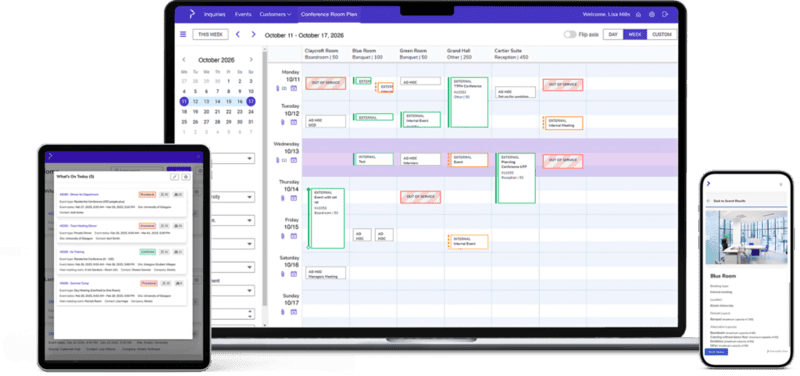
None of that works without visibility, though. Every decision in Dan’s story came from one connected system showing him the whole picture instead of a dozen disconnected ones. That’s the thread back to us: focus isn’t just a mindset, it’s something the right system makes possible.
If any of this sounds like where your team is right now, we’d love to talk it through, and we’ll take a look at what that could look like for your institution.
Request a Demo Today!
Supporting 350+ institutions across 20 countries, we respect your privacy and use your information to share relevant insights, products, and services. You may unsubscribe from these communications at any time. For more information, check out our Privacy Policy.
To learn about RoomSync visit www.roomsync.com