

What we cover / TL;DR
Why reactive software management puts universities at risk
How ownership and proactive maintenance reduce cost and stress
Practical steps to protect systems and student experience
Universities rely on mission‑critical software to run everything from administration to academic delivery. Yet many institutions struggle to resource the ongoing maintenance these systems require. Campus users want better support, but shouldn’t have to choose between delivering world‑class student experiences and keeping software running.
When systems fall behind on updates and optimisation, institutions become more vulnerable to cybersecurity threats, miss out on new efficiencies, and accumulate technical debt that becomes increasingly difficult and expensive to resolve.
Insights from software providers point to a more effective approach: proactive maintenance paired with clear ownership.
The Power of Ownership and Proactive Maintenance
Software providers consistently report that customers who assign a dedicated owner to major systems (fractional ownership is often just fine!) experience significantly better outcomes. This owner, empowered with the authority and resources to maintain the system proactively, ensures that the software is not only current with the latest updates and security patches but also optimised for maximum efficiency and effectiveness.
This level of attention and care prevents the common pitfalls of reactive maintenance, where issues are only addressed after they have already caused significant disruption. It often takes just a few hours per month per system which should be achievable for any institution and for this matter, any business of similar size.

Key takeaways:
Clear ownership drives accountability and better system health
Proactive maintenance reduces disruption and emergency work
Small, consistent time investment prevents large future costs
The Advantages of Hosted and Managed Services
Universities that opt for hosted and managed services for their mission-critical software witness increased success. These arrangements relieve the institution of the day-to-day burdens of software maintenance, as the service provider assumes responsibility for ensuring the system is up-to-date, secure, and running optimally. This model not only enhances security and operational efficiency but also allows already stretched university IT staff to focus on strategic initiatives rather than routine maintenance tasks.
Features to look for include:
Reduced operational and security risk
More time for strategic, student‑focused initiatives
Predictable costs and clearer accountability
Learning from Reactive Responses to Cyber Attacks
A concerning trend observed by software providers is the reactive approach many universities adopt following a cyber attack. Institutions often make sweeping changes to their IT maintenance and management practices only after being a victim. This includes adopting all the measures previously mentioned—assigning system owners, investing in proactive maintenance, and transitioning to hosted and managed services.
While these actions significantly improve the institution’s resilience and operational efficiency, it’s unfortunate that a disruptive event is frequently the catalyst for such improvements. Universities are finding millions to rescue and repair during and after instances of cyber crime, which could often be prevented by using much smaller sums more proactively.

Why this matters:
Reactive change is far more expensive than prevention
Cyber incidents disrupt students, staff, and operations
Proactive investment protects both budgets and wellbeing
Finding a Proactive Path Forward

To protect their digital ecosystems and avoid reactive cycles, universities should:
Assign system owners: One owner can often manage multiple systems, depending on scale and complexity.
Adopt hosted and managed services: Reduce pressure on IT teams and strengthen security and performance.
Learn from others: Many institutions now say “it’s not if, but when.” Don’t wait for an incident to act.
Integrate maintenance into strategy: This must be supported from the top, frontline users are already stretched.
Build cybersecurity culture: Good system hygiene should be habitual, not reactive.
Key benefits include:
Lower long‑term costs
Improved cybersecurity posture
Stronger support for student and staff experience
A Final Thought
By taking these steps, universities can not only mitigate risks but also unlock the full potential of their mission-critical software systems, ensuring they are robust, secure, and capable of supporting the institution’s evolving needs. The transition from a reactive to a proactive approach in software maintenance represents a strategic investment in the university’s future, one that promises to deliver results in operational efficiency, cybersecurity, and educational excellence.
… Multiple fatalities are required to erect a speed camera across North America, don’t be like speed cameras.
Why It Matters
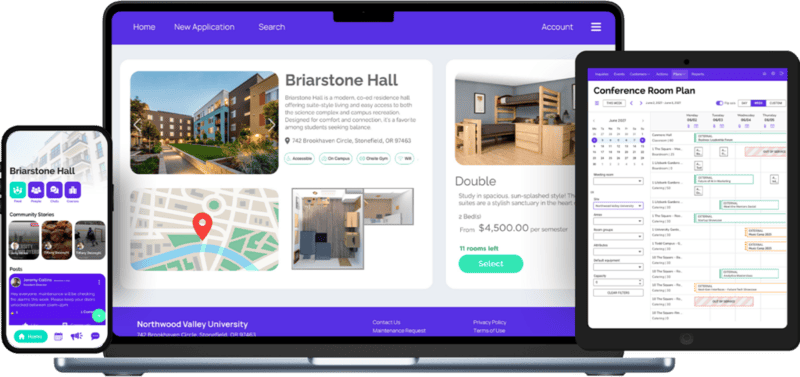
Choosing the right student housing software is a critical decision that can profoundly impact your campus community. By considering these five factors, you can ensure that you select a solution that meets your needs and enhances the student experience. The right software empowers your staff to build a stronger, thriving community where students feel supported and engaged.
See What a Free Software Health Check Reveals
A free software health check helps you understand whether your systems are being maintained proactively, or left exposed until something breaks. We assess ownership, maintenance practices, security posture, and upgrade readiness, giving you a clear picture of hidden risk, technical debt, and missed efficiencies.
If you want to see how Kx Solutions support proactive system health we’d love to walk you through it.
Let’s talk about your challenges and build a thriving community together.